


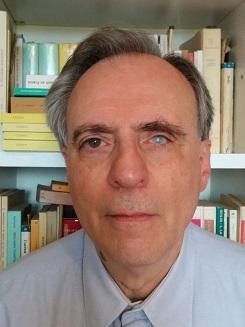
Perfezionatosi alla Scuola Normale Superiore di Pisa (1974-1978), S.A. è stato Visiting Professor all'Univ. di Harvard (1981) e borsista CNR (1980-1986) presso: l'Internationaal Instituut voor Sociale Geschiedenis (Amsterdam), la British Library (Londra), la Bibliothèque Nationale (Parigi) e la Deutsche Presse-Forschung (Brema). Selezionato dal Prof. Dr. Gerhard A.Ritter, Presidente della Società degli Storici Tedeschi, ha studiato presso l'Institut für Neuere Geschichte e la Staatsbibliothek di Monaco di Baviera come Stipendiat della Alexander von Humboldt-Stiftung (1989-1992). E' Professore di Storia delle Dottrine Politiche all'Univ. Di Siena dal 1987. Dieci volumi e quaranta monografie in inglese, tedesco e italiano sul pensiero politico in Russia, Austria e Germania tra Settecento e Novecento illustrano le principali
Linee di ricerca: Otto Bauer und der Austromarxismus (1978-1980); The Influence of Tugan-Baranovsky's Theories on Modern Historiographic Research (Harvard Univ. Press, 1984); Parlamentarismo e partito operaio nella genesi del pensiero politico di Kautsky (1984); Il problema 'partito' negli scrittori politici tedeschi 1851-1914 (1993); Gli scrittori politici tedeschi e la rivoluzione francese 1789-1792 (2000); La teoria della classe politica da Rousseau a Mosca (2001); Parlamentarismo e socialdemocrazia nel pensiero politico di Kautsky (2002); Aristocrazia politico-culturale e classe dominante nel pensiero tedesco (2008); Classe dominante, classe politica ed élites negli scrittori politici dell'Ottocento e del Novecento (2008); Sul patriottismo costituzionale tedesco tra Settecento e Novecento (2011); Il cattolicesimo politico tedesco di fronte alla guerra: Matthias Erzberger (2016).
Progetti di ricerca in corso. Sul Settecento tedesco: J.A. Eberhard ed E.F. Klein critici del primato della 'libertà politica' repubblicana e della Rivoluzione francese. Sull'Ottocento europeo: A. Ruge e G. Mazzini alle origini della European Democracy. Sul Novecento tedesco: M.Erzberger e la 'politicizzazione delle masse'.
Graduated at the Scuola Normale Superiore di Pisa (1974-1978. He was Visiting Professor at the University. Harvard (1981) and CNR Fellow (1980-1986) at the International Institute for Social Sciences (Amsterdam), the British Library (London), the Bibliothèque Nationale (Paris) and the Deutsche Presse-Forschung (Bremen). Selected by Prof. Dr. Gerhard A.Ritter, President of the German Historical Society, studied at the Institut für Neuere Geschichte and the Staatsbibliothek in Munich as Stipendiat of Alexander von Humboldt-Stiftung (1989-1992). He is Professor of History of Political Doctrines at the University of Siena since 1987. Ten volumes and forty monographs in English, German and Italian on political thought in Russia, Austria and Germany between the eighteenth and twentieth century illustrate the main political theories.
Research lines: Otto Bauer und der Austromarxismus (1978-1980); The Influence of Tugan-Baranovsky's Theories on Modern Historiographic Research (Harvard Univ. Press, 1984); Parliamentarianism and labor party in the genesis of Kautsky's political thought (1984); The 'party' problem in German political writers 1851-1914 (1993); German political writers and the French Revolution 1789-1792 (2000); Political class theory from Rousseau to Moscow (2001); Parliamentarianism and Social Democracy in Kautsky's Political Thought (2002); Political-cultural aristocracy and dominant class in German thought (2008); Dominant class, political class and elite in the political writers of the nineteenth and twentieth centuries (2008); German constitutional patriotism between the eighteenth and twentieth centuries (2011); German Political Catholics in the face of the war: Matthias Erzberger (2016).
Research projects in progress: In the eighteenth century German: J.A. Eberhard et E.F. Klein critics of the primacy of Republican 'political freedom' and of the French Revolution. Towards the 19th century: A. Ruge and G. Mazzini at the origins of European Democracy. German novelties: M. Erzberger and the 'politicization of the masses'
